Filtrar contenido
Flamenco y sevillanas: ¿en qué se diferencian realmente?
Aunque comparten raíces y pasión, hablamos de dos expresiones artísticas diferentes
Sevilla en primavera tiene un color y un ritmo especiales. El aroma a azahar flotando en el aire coincide con una época del año donde la música toma las calles y los tablaos de la ciudad. Sin embargo, para quienes llegan de fuera (e incluso para muchos de aquí) , suele surgir una confusión típica: ¿el flamenco y las sevillanas son lo mismo?
La respuesta corta es no. Aunque están profundamente conectados, nacen de conceptos diferentes, se ejecutan de otra manera y persiguen fines distintos. Para que te conviertas en un auténtico experto y disfrutes al máximo de tu experiencia cultural en Teatro Flamenco Sevilla, te explicamos de forma sencilla las diferencias clave que existen entre ambos.
Las sevillanas: el folclore de la fiesta, la alegría y el pueblo
Las sevillanas son, por definición, un cante y baile folclórico. Su origen se remonta a las seguidillas castellanas que se bailaban en la época de los Reyes Católicos, las cuales fueron evolucionando y mezclándose con la estética andaluza con el paso de los siglos hasta convertirse en el baile oficial de la Feria de Abril.
Lo que caracteriza a las sevillanas es su accesibilidad y su estructura fija:
- Estructura inamovible: Un baile completo consta siempre de cuatro coplas. Cada una de ellas tiene unos pasos perfectamente determinados (el paseíllo, las pasadas, los careos y el remate). No hay espacio para cambiar el guión.
- Carácter social: Están pensadas para bailar en pareja o en grupo, para que el pueblo participe. Es un baile festivo, de galanteo, donde las miradas y las sonrisas son las protagonistas.
- Fáciles de aprender: Al tener una coreografía tan matemática, cualquier persona puede aprender a bailarlas con un poco de práctica para disfrutarlas en las casetas y celebraciones populares.
El flamenco: el arte de la improvisación y la emoción profunda
El flamenco no es un folclore regional; es un arte universal de una complejidad musical inmensa, reconocido como Patrimonio Inmaterial de la Humanidad. Es el resultado del mestizaje de múltiples culturas (gitana, árabe, judía y andaluza) que se asentaron en el sur de España.
El flamenco es un lenguaje vivo que se sostiene sobre tres pilares fundamentales:
- La improvisación y el momento: A diferencia de las sevillanas, el flamenco puro no tiene una coreografía fija de principio a fin. Existe una estructura de base, pero el bailaor o bailaora va creando y respondiendo al cante y a la guitarra en tiempo real. Nace de la espontaneidad absoluta.
- Variedad de palos flamencos: El flamenco cuenta con decenas de estilos diferentes llamados palos flamencos (soleá, alegría, seguiriya, taranto, tientos...). Cada uno expresa una emoción distinta, desde el dolor más profundo y desgarrador hasta la fiesta más absoluta.
- Virtuosismo y exigencia: Requiere años de dedicación profesional. El dominio del zapateado como percusión física, el braceo, el control técnico de los giros y la capacidad interpretativa exigen una preparación física y musical extrema.
Los puntos clave para distinguirlos fácilmente
Para recordar la distancia que separa a ambas disciplinas de un solo vistazo, podemos fijarnos en tres aspectos esenciales de su ejecución:
- El propósito y el entorno: Mientras que las sevillanas nacen por y para la participación del pueblo en ferias, romerías y fiestas de carácter social, el flamenco está concebido principalmente como un arte escénico y musical complejo que se disfruta de cara al público en grandes tablaos especializados.
- La libertad coreográfica: Las sevillanas obligan a los intérpretes a seguir una coreografía rígida y matemática de cuatro coplas fijas donde todos hacen los mismos pasos a la vez. El flamenco, por el contrario, es flexible, libre y deja un enorme margen para la improvisación y la expresión personal de cada artista.
- La dificultad técnica: Cualquier aficionado puede aprender la base de las sevillanas y disfrutar del baile en un ambiente festivo. En cambio, el flamenco profesional conlleva una alta exigencia técnica en el calzado, los ritmos y los movimientos, quedando reservado para artistas que consagran su vida entera a su estudio.
Siente el contraste y la magia del flamenco en directo
Aunque las sevillanas se cantan y bailan a ritmo de compás, la mejor manera de entender la enorme distancia que las separa de un taranto o una soleá es vivirlo en primera persona.
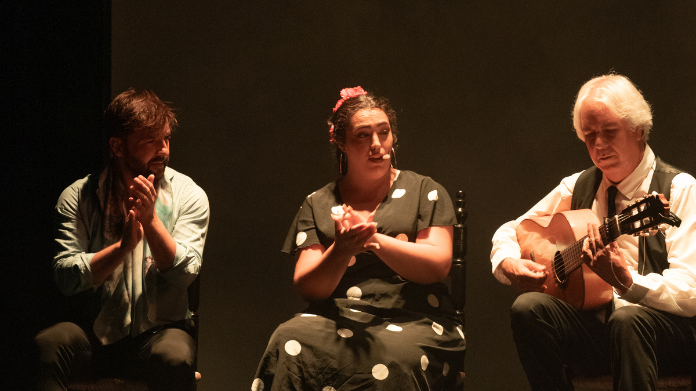
En Teatro Flamenco Sevilla, nuestro elenco de artistas te ofrece cada tarde un viaje completo por la historia y la magia del arte jondo. En la distancia corta que ofrece nuestro íntimo patio de butacas, podrás percibir perfectamente cuándo el artista se ciñe al ritmo festivo y cuándo se desgarra el alma en una improvisación que sólo ocurrirá esa noche sobre nuestras tablas.
Vive el flamenco en el corazón de Sevilla
Si estás en la ciudad, salir a bailar sevillanas en una celebración tradicional es una experiencia maravillosa. Pero si buscas emocionarte de verdad, conectar con las raíces y presenciar la fuerza arrolladora del arte andaluz, tu parada obligatoria está en nuestro teatro.
Reserva aquí tus entradas para Teatro Flamenco Sevilla y ven a descubrir la verdadera grandeza del flamenco en directo. ¡Te aseguramos una experiencia inolvidable!
Lo más leído
El lenguaje del flamenco: cómo se entienden los artistas durante un espectáculo en directo
En Teatro Flamenco Sevilla, el compás, la escucha y la complicidad entre los artistas permiten que el cante, el baile y la guitarra construyan una experiencia única en cada espectáculo flamenco en directo